Crypto Press Release Checklist: What Editors Check Before Publishing
Short answer: Do not submit a crypto press release until an editor can verify the event, every named party has approved the wording, and the publication terms are understood. A mismatched ticker, unsupported metric, or unapproved partner claim is enough to stop the release. Fix the master copy first; syndicated corrections are slower and harder to control.
Crypto editors do not reject a release because it lacks enough adjectives. They reject it because the news is unclear, proof is thin, partner has not approved the wording, or the copy creates avoidable legal and reputational risk.
This crypto press release checklist is designed for the final review before distribution. It does not replace a writing guide or legal advice. Its job is simpler: help a founder, communications lead or agency decide whether the release is ready to leave the company.
1. Confirm that the update is genuinely newsworthy
A press release needs a verifiable change. A token listing, funding round, signed partnership, product launch, protocol upgrade, security audit or market expansion can qualify. A broad statement about future ambition usually cannot.
Test the announcement in one sentence: [Project] did [specific thing] on [date], affecting [specific audience or market]. If the sentence collapses into words such as “innovative,” “disruptive,” or “game-changing,” the underlying news is probably still missing.
| What the draft says | What an editor needs |
|---|---|
| [Project] announces an exciting strategic partnership. | [Project] signs a two-year wallet integration agreement with [Wallet]; rollout starts on [date]. |
| [Protocol] is changing the future of DeFi. | [Protocol] launches collateralized lending on Arbitrum after [auditor] completes its smart-contract audit. |
If the update needs explanation rather than a timestamp, it may belong in a contributed article instead. Use Rankovate’s PR distribution versus guest posting guide to choose the right format before drafting.
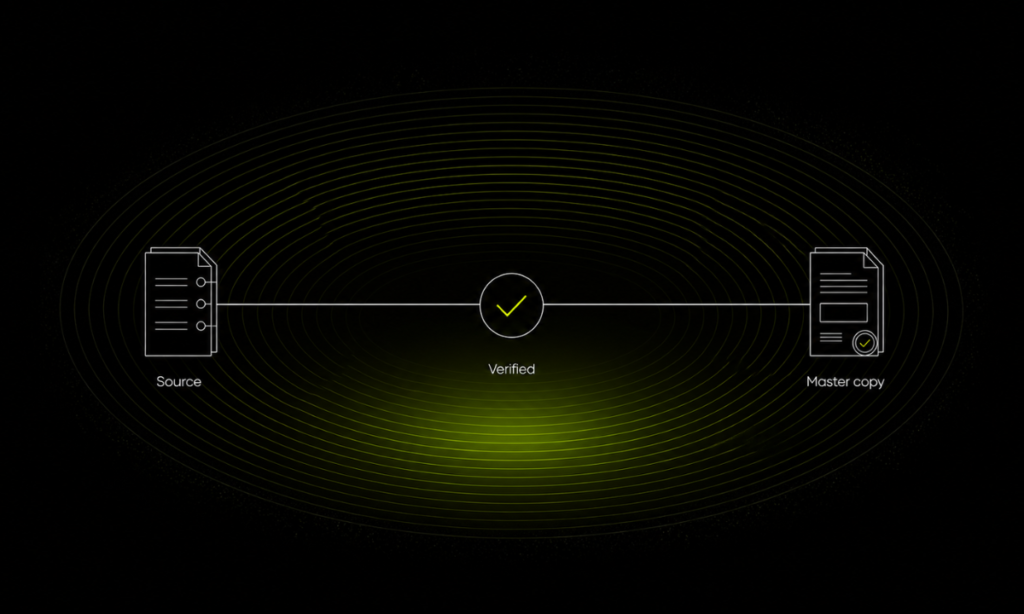
2. Verify every material fact at the source
Do not fact-check from memory, an old pitch deck or a Telegram message. Check names, titles, dates, amounts and technical details against the latest approved source.
- Identity: legal company name, public brand name, executive names and job titles.
- Token details: official token name, ticker, network, token standard and contract address when relevant.
- Timing: announcement date, launch time, timezone, embargo and regional restrictions.
- Numbers: funding amount, user count, TVL, transaction volume or growth rate, including the measurement period and source.
- Third parties: investors, exchanges, auditors, partners and customers, using wording they have approved.
- Links: official website, documentation, block explorer, audit report, product page and media contact.
Assign one owner to each sensitive fact. A spreadsheet or approval log is enough: claim, source, owner, approval status and last-checked date. What matters is that the final reviewer can trace every material statement.
3. Match the checks to the announcement type
Not every crypto release needs the same technical block. Asking for a contract address in a corporate funding announcement adds noise; omitting trading pairs from an exchange-listing release creates a real gap.
| Release type | Proof an editor will expect |
|---|---|
| Exchange listing | Is the listing confirmed in writing? Check the exact asset name, ticker, pairs, deposit, withdrawal and trading times, timezone, regional limits and public listing URL. |
| Funding round | Has the round actually closed? Confirm the amount and currency, round type, participating investors, approved use-of-funds wording and whether capital is raised, committed or still targeted. |
| Partnership | What was signed, and what will each side deliver? Use both legal names, the start date, agreed scope and an approved quote. Call it an integration, contract, MOU or pilot only when that label is accurate. |
| Product or protocol launch | What can users access today? Name the version, network, supported users or markets, audit status and public documentation. Keep roadmap items separate from live features. |
| Audit or security milestone | Link the report and name the auditor, scope, completion date, exclusions and unresolved findings. An audit records a review; it does not prove that the protocol is safe. |
4. Remove claims that create editorial risk
Crypto publications are cautious about investment language for good reason. Claims such as guaranteed returns, risk-free income or certain price growth are not merely overenthusiastic; U.S. investor-protection agencies identify promises of high guaranteed returns with little or no risk as fraud warning signs.
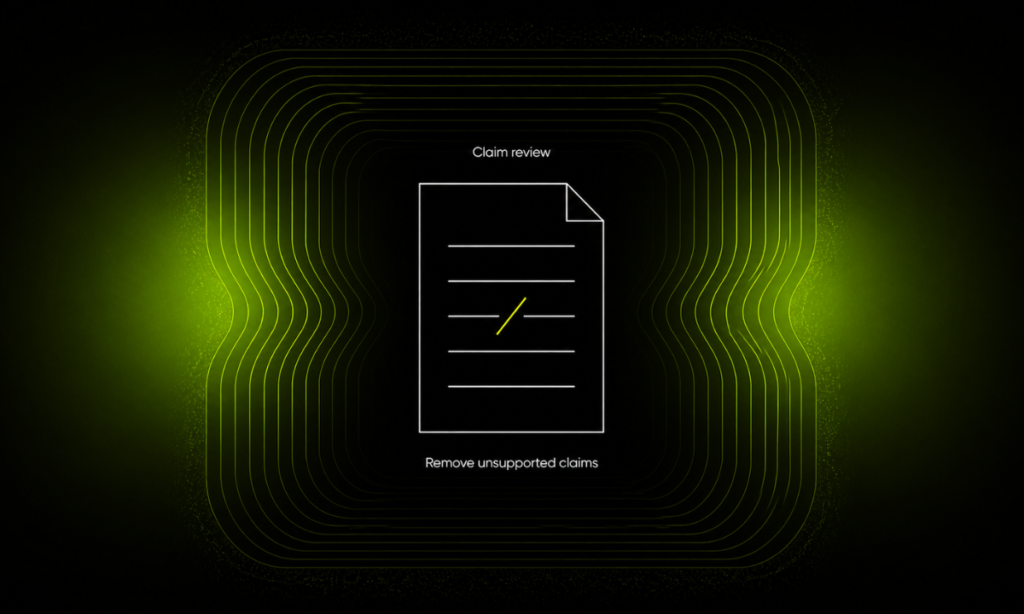
Review the Investor.gov alert on fraudulent crypto trading websites and remove any wording that could imply a guaranteed financial result. Then check the rest of the release for claims that cannot be substantiated.
| What the draft says | What to write instead |
|---|---|
| Guaranteed 20% returns | Delete the promise. If yield is variable, explain how it is calculated, the period, conditions and risks. |
| The most secure DeFi protocol | Write what happened: “[Protocol] completed a [scope] audit by [auditor] on [date].” Link the report and state material limitations. |
| Partnered with XYZ | Describe the real relationship: signed integration, paid campaign, MOU, pilot or early discussion. Use wording the other party approved. |
| Used by millions | Use a named metric and timeframe. “1.2 million registered accounts as of [date]” is not the same as monthly active wallets. |
| The first project to… | Keep “first” only if you can show the comparison set and research method. Otherwise, describe the feature without the superlative. |
5. Check the headline, lead and release structure
The final review is not the moment to rewrite the entire release. Confirm that the headline names the event without hype; the lead identifies who did what, when and why it matters; the body separates present facts from future plans; and the quotes add context rather than excitement. Finish with an accurate boilerplate and a media contact who will be available during the publication window.
If the structure still needs work, use Rankovate’s complete Web3 press release writing guide. The checklist should validate the final draft, not duplicate the writing process.
6. Lock approvals, ownership and the final version
A release can be factually correct and still publish the wrong wording because teams review different files. Use one final version, one decision owner and a visible approval status. The project owner confirms the event and timing; the technical owner checks product and performance claims; legal or compliance reviews sensitive statements when required; and communications locks the copy, assets and distribution instructions. Do not treat silence as partner approval: named exchanges, auditors, investors and commercial partners should confirm how they are described.
7. Prepare the publication assets
Editors lose time when basic materials arrive late or in unusable formats. Prepare high-resolution light and dark logos; a clean featured image with usage rights, filename and alt text; relevant screenshots or diagrams; approved headshots and captions when needed; a short boilerplate; a working media contact; and final public URLs for the website, documentation, audit, explorer or product page.
Check every link in a private browser window. A link that works only for a logged-in team member is not a usable source for an editor.
8. Confirm the publication route and disclosure
A distributed press release, sponsored article and independent editorial story are different products. Before paying or promising coverage internally, write down which route applies to each outlet.
- Editorial coverage: a journalist or editor decides whether to report the story; the outcome cannot honestly be guaranteed.
- Sponsored placement: the brand pays for publication and the page should carry clear commercial disclosure.
- Press release placement or syndication: the approved announcement is published or redistributed, often with limited editorial changes.
For campaigns reaching U.S. consumers, the FTC’s native advertising guidance says commercial content should be identifiable and necessary disclosures should be clear and prominent. For search compliance, Google recommends qualifying paid-placement links with rel=”sponsored”; rel=”nofollow” remains acceptable.
Disclosure does not make a placement useless. It makes the route honest. Evaluate the publication for audience relevance, visibility, message accuracy and reporting rather than treating an unqualified dofollow link as the entire product.
9. Check the outlet’s current submission rules
Do not assume that one outlet’s approval rules apply to another. Word limits, prohibited topics, link counts, image requirements, refund policies and turnaround times change by publisher and package.
For example, Token Metrics lists its current submission fields, content limits and rejection terms, while Coin Bureau describes a separate editorial review and publication process. The exact rules may change; check the target outlet on the day of submission and save the agreed terms.
- Named outlet or outlet tier included in the order.
- Content label and expected link treatment.
- Editorial changes allowed without renewed approval.
- Turnaround, scheduling and embargo handling.
- Rejection, replacement and refund policy.
- Expected permanence and final live-link reporting.
10. Coordinate timing and the correction plan
The release date must match the underlying event. Confirm the timezone, exchange or partner announcement window, social schedule and the person available to answer editor questions.
If the release is under embargo, obtain an explicit agreement from each recipient. Sending an email with the word embargo does not automatically create acceptance. Keep a correction plan ready: who approves a change, who contacts the publisher and which channels must be updated if a material fact changes.
Final crypto press release checklist
The release can move to distribution when every statement below is true:
- The announcement describes one real, timely and verifiable development.
- Every material name, date, number and technical claim has a current source.
- The details match the announcement type and exclude irrelevant filler.
- Investment promises, price predictions and unsupported superlatives are removed.
- The headline, lead, body, quotes, boilerplate and media contact are complete.
- Internal reviewers and every named third party have approved the final wording.
- Images, logos, captions and public supporting links are ready and licensed for use.
- The publication route, disclosure and link treatment are understood.
- The outlet rules, price, timing and rejection terms have been confirmed.
- The post-publication reviewer and correction process are assigned.
Go/no-go rule: If the reviewer has to say “we think,” “probably” or “the partner should be fine with it,” the release is not ready. Find the evidence, get approval, or narrow the claim before submission.
What to review after publication
Publishing is not the last quality-control step. Open every live page and confirm:
- The headline, project name, ticker, dates, and quotes are accurate.
- The commercial label matches the agreed publication route.
- Links resolve to the intended public pages and use the expected attributes.
- Images display correctly on desktop and mobile.
- The page remains accessible and can be checked for indexing after search engines have had time to crawl it.
- The campaign report distinguishes published, pending, rejected and replaced placements.
Do not promise permanent indexation or search rankings. Record what can be verified: the live URL, publication status, label, date and any available performance data.
How Rankovate helps prepare a release for publication
Many teams come to Rankovate with a draft that is close, but not ready to send. The useful work is finding the weak claim, missing approval or unsuitable outlet before the campaign starts, then turning the approved copy into a clean publication plan.
Rankovate reviews and writes Web3 press releases, plans the media route, coordinates selected placements and reports the live results. We do not sell promises about token price, investor attention or rankings. We sell clear copy, sensible outlet choices and documented delivery.
- Release review: a line-by-line check of the angle, evidence, structure, links and risky claims.
- Media planning: publication routes chosen around the news, audience, timing and budget.
- Writing and editing: a fresh release from approved facts or a focused edit of the draft you already have.
- Distribution coordination: submissions, publisher questions, status updates and live links where available.
Have an announcement ready? Send Rankovate the draft and campaign details. We will tell you what is ready, what still needs proof and which publication routes make sense.
Frequently asked questions
What is a crypto press release checklist?
It is the last check before a release leaves your team. It catches the problems that cause delays or rejection: weak news, facts no one can source, unapproved names, promotional claims, missing files and unclear publishing terms.
Who should approve a crypto press release?
At minimum, the announcement owner and communications lead should approve the release. Bring in technical, legal or compliance reviewers when the claims demand it. Anyone named, an exchange, investor, auditor, customer or partner, should sign off on the relationship wording and any quote.
Why do crypto press releases get rejected?
Most rejections are preventable: the news is too thin, a number has no source, the partner never approved the wording, token details are wrong, links are broken or the draft ignores the outlet’s rules.
Does a crypto press release need legal review?
Not automatically. Seek qualified legal or compliance review when the release touches token sales, fundraising, investment claims, regulated products, regional availability or forward-looking statements. This checklist is an editorial safeguard, not legal advice.
Can a press release guarantee media coverage or rankings?
Independent editorial coverage cannot be promised. A paid placement may come with defined deliverables, but publication still cannot guarantee indexing, rankings, traffic, investors or token-price movement.
Final takeaway
The strongest crypto press release is not the loudest one. It is the one an editor can understand, verify and publish without chasing the team for missing facts.
Before distribution, prove the event, check the claims, secure the approvals and assign the post-live review. The editor should receive a clean, defensible story, not a sales draft they have to fact-check for you.